
When Everyone Can Create Brand Content with AI, Why Should Customers Still Choose You?
AI is rapidly changing the way businesses create and communicate their brands. In the past, a company that wanted to consistently produce high-quality images, videos, copy, or presentations often needed designers, photographers, copywriters, or external agencies. For many small and medium-sized businesses, content creation itself represented a significant barrier in terms of cost, time, and capability.
Today, a single person can use AI to generate images, write copy, create videos, and complete work in minutes that once required several people. For businesses, this means greater efficiency, lower production costs, and more opportunities to communicate with the market. Yet as the same capabilities become available to every competitor, a more important question begins to emerge: If every business can quickly create good-looking brand content, why should customers still choose you?
This may be one of the most important branding questions business owners need to consider in the age of AI.
When “Good Enough” Becomes a Basic Capability
One of the most significant changes brought by AI is not simply that strong companies can work faster. It is that the baseline quality of content across the entire market is rising. A small business without a full marketing team can now produce professional-looking social media content; a salesperson can quickly develop a polished presentation; and a company that once lacked the budget for video production can begin creating video content consistently. Capabilities that once required significant resources and expertise are becoming increasingly accessible.
This is clearly good news for businesses, but it also changes the standard of competition. Twenty years ago, having a professionally designed website could help a company appear considerably more credible than its competitors. Today, a website is simply a basic requirement of doing business. AI-generated content may be heading in the same direction: when most companies can easily produce attractive images, videos, and copy, producing “good content” alone will become less meaningful as a reason for customers to choose one business over another.
AI therefore raises a company’s content capabilities while simultaneously raising the baseline expectations of the market. The real competitive difference may no longer be who can produce the most content, but whether that content consistently helps people understand who you are, how you are different, and why you deserve to be chosen.
More Content Does Not Necessarily Build a Stronger Brand
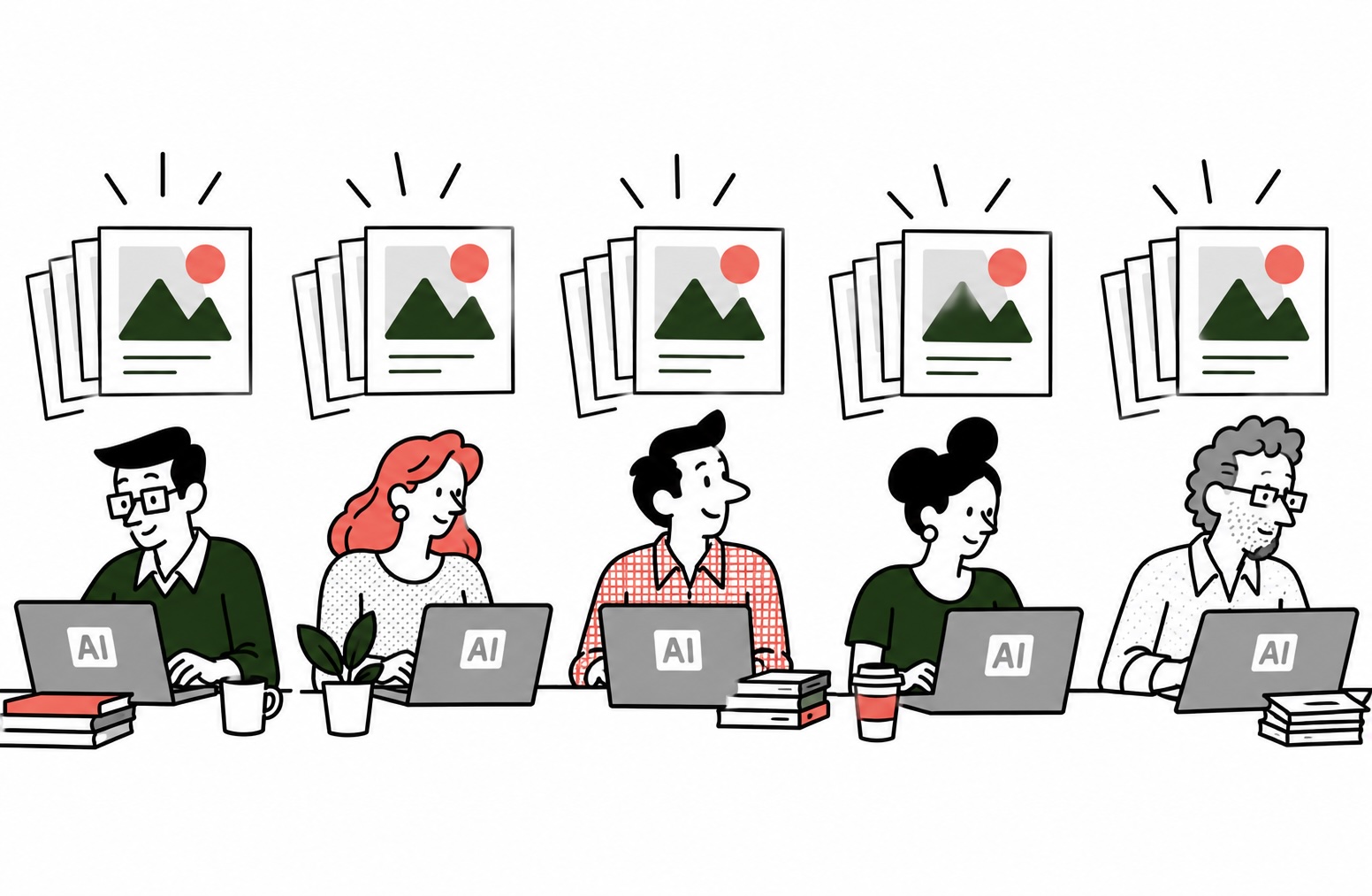
This is one of the easiest things to overlook when businesses adopt AI. If a company previously produced four pieces of content each month and can now produce forty with AI, its production efficiency has clearly increased. But if customers see those forty pieces of content and still cannot explain how the company differs from its competitors, what the business has primarily increased is volume—not brand influence.
A brand becomes meaningful not because a company communicates more frequently, but because repeated interactions gradually create a clear and consistent understanding in the customer’s mind. Customers begin to understand what the company is particularly good at, what it believes in, who it is best suited to serve, and why it represents a different choice from others in the market. When a future need arises, those accumulated perceptions can begin to translate into trust, preference, and eventually a longer-term relationship.
Businesses therefore need to look beyond the question, “How much content can we now produce with AI?” A more meaningful question is: Does this content help customers understand us better, trust us more, and become more willing to choose us? If the answer remains unchanged, AI may have improved the company’s content production capability without necessarily improving its ability to build a brand.
AI Can Create Content, but It Cannot Decide Why Customers Should Choose You
AI is exceptionally capable of learning and recombining existing patterns. It can generate premium-looking imagery, technology-oriented videos, professionally written articles, and communication styles based on established conventions within a market. These capabilities allow businesses to achieve a level of execution that once required specialist teams, but they also create a new challenge: when companies use similar tools, models, and sources of information, the market can quickly fill with content that looks polished yet increasingly similar.
AI can help a business answer questions such as “How should we design this image?”, “How should we write this article?” or “How should we present this video?” What it cannot independently determine is the more fundamental question: Why should customers choose us rather than another company? That answer still has to come from the business itself—who it chooses to serve, which problems it is committed to solving, how it creates value, what it believes in, and what position it wants to occupy in the customer’s mind.
If these questions remain unresolved, having more powerful AI simply gives the company a more powerful content-production capability. In fact, it may allow an unclear brand direction to spread more quickly and at greater scale. AI is very good at amplification, but the business must first decide what is worth amplifying.
The Real Value of AI Goes Beyond Efficiency
None of this means businesses should be afraid of AI. On the contrary, AI is likely to become an increasingly important capability in brand management. It can help companies respond to markets faster, adapt communication for different audiences, organize large amounts of information, and maintain customer communication across more touchpoints. For smaller businesses with limited resources, AI may also make capabilities that were previously affordable only to larger organizations far more accessible.
However, businesses can evaluate the value of AI beyond simply measuring how much time or money it saves. Turning a three-day image-production process into three minutes is an obvious efficiency gain. From a brand perspective, however, the more important question is whether that three-minute piece of content helps customers understand the company’s value more quickly, reduces uncertainty when making a choice, and gradually strengthens their trust in the business.
In other words, AI can give businesses a much stronger communication capability, but that capability ultimately needs to translate into outcomes that business owners actually care about: more people understanding the brand, more people trusting it, more people choosing it when a need arises, and more customers choosing to return. Efficiency may be the most visible value AI creates, but trust and choice are ultimately the values a brand needs to create.
As Content Becomes Easier to Produce, Judgment Becomes More Valuable
For many businesses, the traditional problem was simply an inability to produce enough. They lacked the budget, designers, content teams, or time required to communicate consistently with the market. AI is rapidly removing many of these limitations. As production becomes less scarce, however, the central question gradually shifts from “Can we make this?” to “What should we make?”
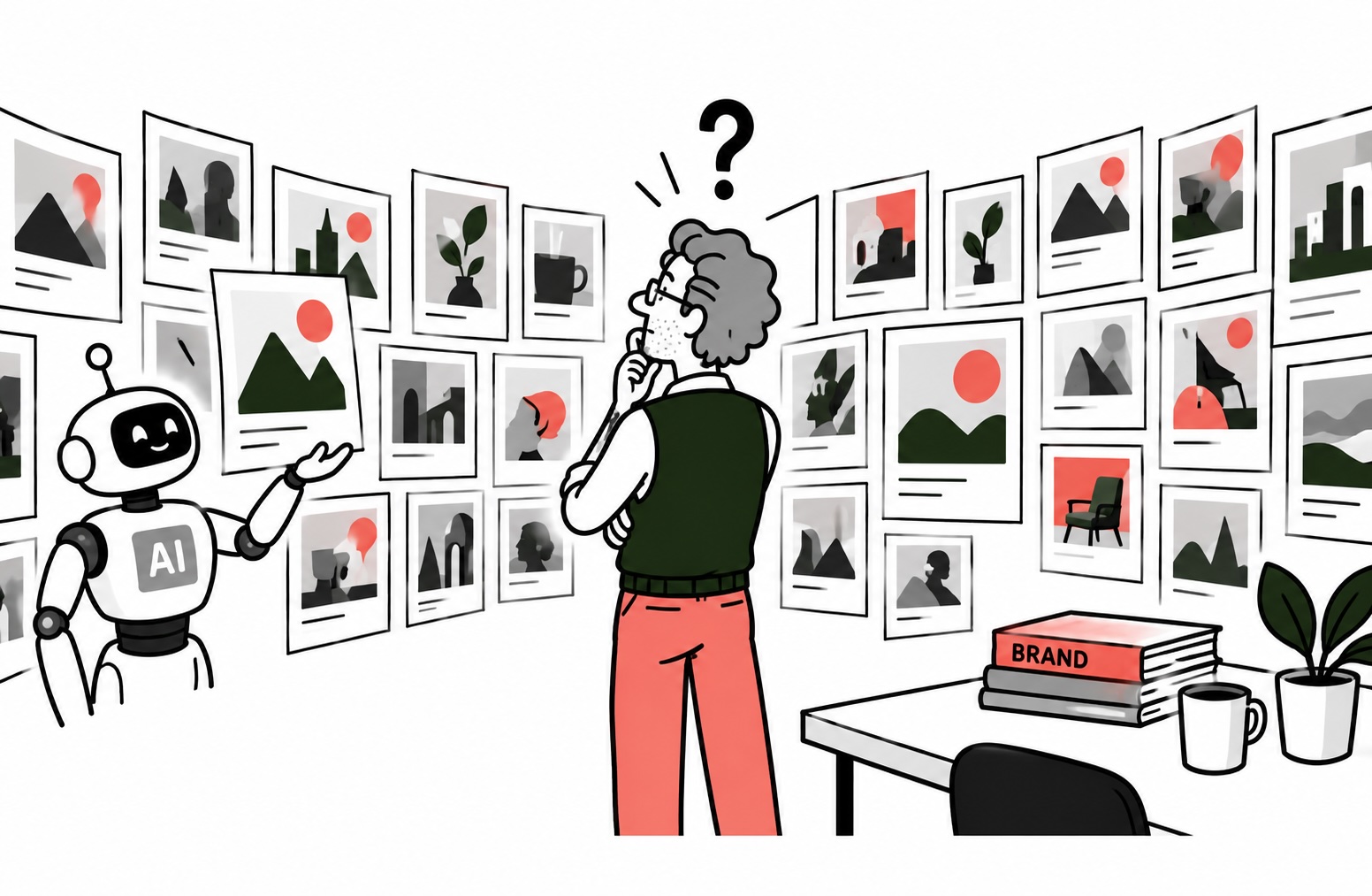
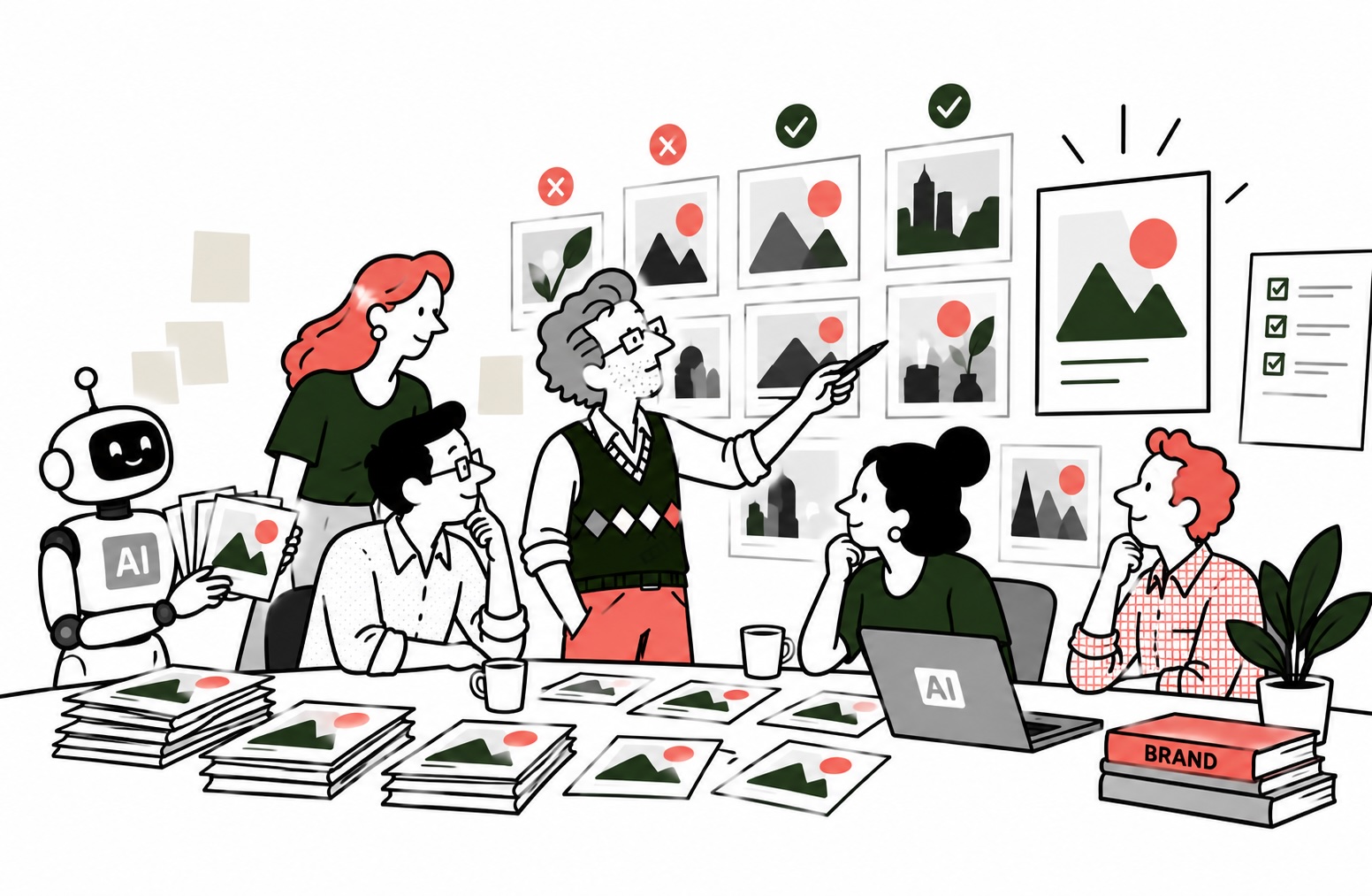
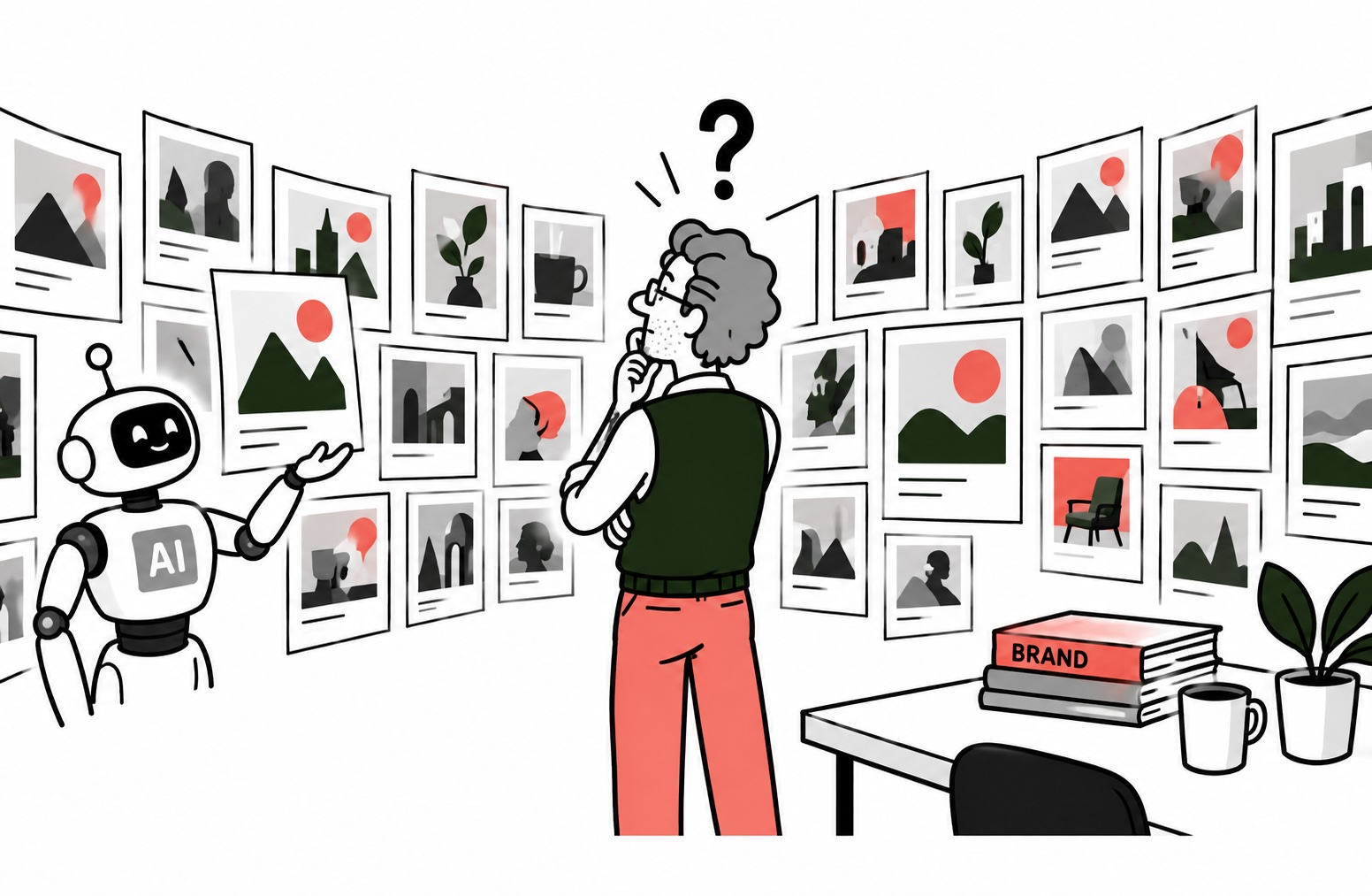
When AI can instantly provide ten images, ten headlines, and ten different ways to communicate—and all of them appear reasonably good—a business needs the ability to determine which option genuinely represents the brand. Which messages deserve to be repeated? Which visual direction merely follows a trend, and which genuinely represents the company? Which content builds market trust, and which simply looks attractive without helping customers understand the business any better? These are not questions of generation; they are questions of brand judgment.
This is where brand governance becomes increasingly important. We previously explored this in #116 What is Brand Governance?, as well as in #158 Who Owns the Brand? Many Companies Never Clarify This from the Start, which examined where brand responsibility sits within an organization. As AI distributes content-creation capability beyond a small group of specialists to marketing, sales, human resources, different markets, and external partners, businesses increasingly need shared brand principles that ensure greater efficiency continues to move the organization in the same direction.
A Brand Consultant’s Perspective: AI Should Amplify the Brand, Not Replace It
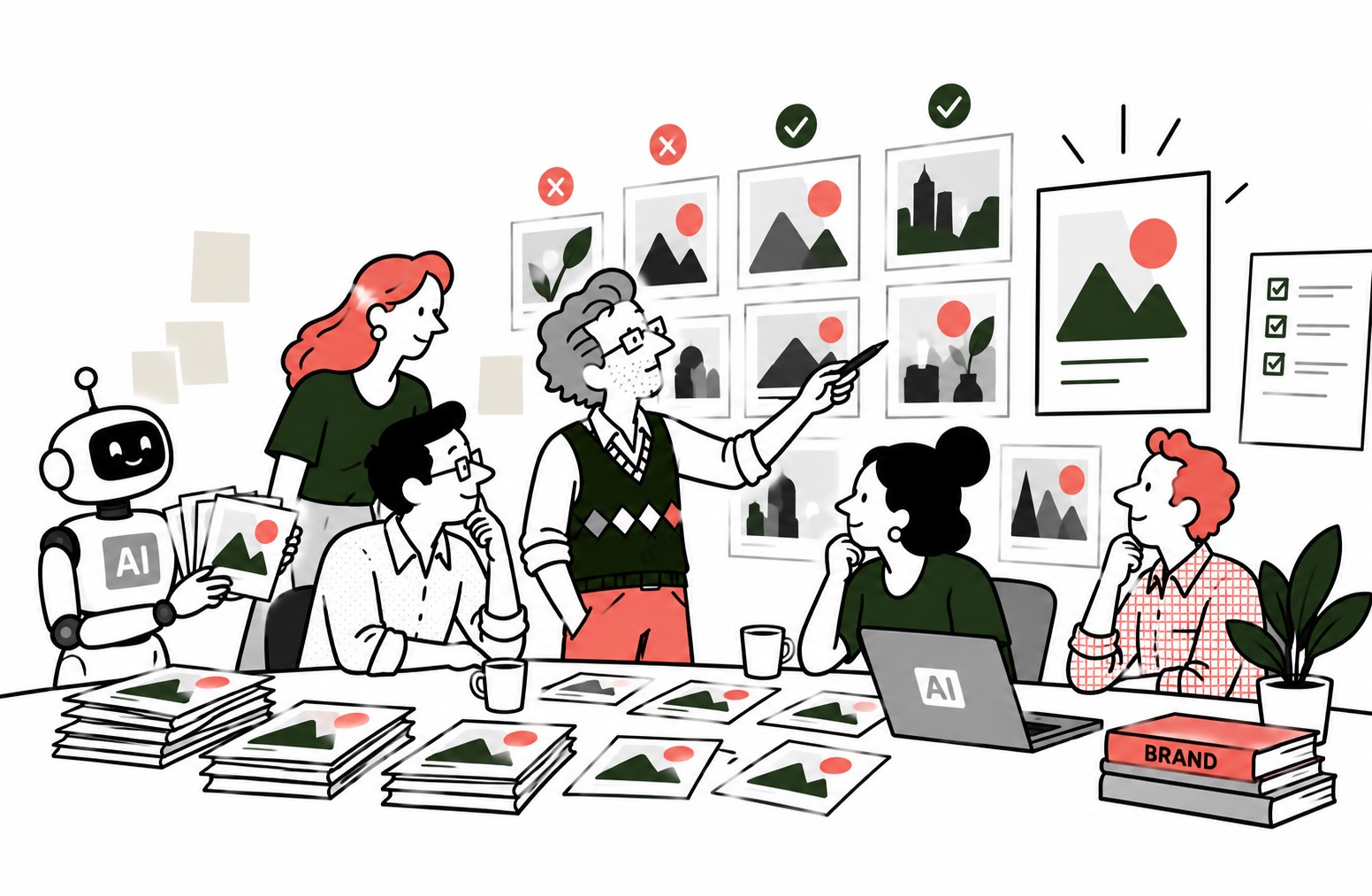
At SAM BRANDESIGN, we see two distinct levels of capability when businesses use AI: content production capability and brand capability. Content production capability determines whether a business can create communication more quickly and efficiently. Brand capability determines whether the organization knows what is worth creating, what deserves to be communicated consistently, and what perception those activities are ultimately intended to establish in the market.
AI is already becoming exceptionally effective at the first. The second requires a business to establish its own direction. This connects with the argument we explored in #157 When a Company Grows, Branding Is No Longer Just a Design Problem: as an organization expands, branding gradually becomes a management issue rather than simply a design issue. AI is accelerating that transition.
Before adopting AI at greater scale, businesses can therefore return to several fundamental questions. How do we want customers to understand us? Why should they trust us? What genuinely differentiates us from our competitors? What kind of long-term relationship do we want to build with our customers? When these answers are clear, AI becomes more than a cost-saving tool—it becomes an amplifier of the company’s brand capability.
Conclusion: Don’t Just Use AI to Do More. Use It to Become Clearer.
The real opportunity created by AI is not simply the ability to produce more images, videos, and copy. It is the ability for a business that already understands who it is to communicate its value to more people, with greater speed and consistency. As similar AI tools eventually become available to almost every company, the tools themselves will be difficult to sustain as a long-term competitive advantage. What will continue to create meaningful differences is the judgment behind them.
The question business owners should be asking in the age of AI may therefore not be, “How much content can we create with AI?” It may be something much more fundamental:
When everyone can create content with AI, what reason do customers still have to choose us?
When a business can answer that question clearly, AI can finally begin to create meaningful value for the brand.

當每個人都能用 AI 做品牌內容,客戶為什麼還要選擇你?
AI 正在快速改變企業建立品牌內容的方式。過去,一家公司如果想持續產出品質不錯的圖片、影片、文案或簡報,通常需要設計師、攝影師、文案人員或外部代理商共同完成。對許多中小企業而言,內容製作本身就是一道成本與能力的門檻,但 AI 的出現正在快速降低這道門檻。
現在,一個人就可以利用 AI 產生圖片、撰寫文案、製作影片,甚至在很短的時間內完成過去需要多人協作的工作。對企業而言,這當然意味著更高的效率、更低的製作成本,以及更多與市場溝通的機會。然而,當所有競爭者都逐漸擁有相同能力之後,另一個更重要的問題也開始浮現:如果每一家企業都能快速做出看起來不錯的品牌內容,客戶為什麼還要選擇你?
這可能才是 AI 時代企業主真正需要思考的品牌問題。
當「做得不錯」變成基本能力
AI 帶來的重要改變,不只是讓原本優秀的企業做得更快,而是讓整個市場的基本內容水準快速提高。一家沒有完整行銷團隊的中小企業,也能製作具有一定專業感的社群內容;一位業務人員可以快速完成提案簡報;原本沒有足夠預算製作影片的公司,也開始有能力持續產生動態內容。過去需要資源與專業才能取得的能力,正在逐漸普及。
這對企業而言當然是好消息,但同時也改變了競爭的標準。二十年前,一家公司擁有一個設計良好的網站,可能就足以建立一定程度的專業印象;今天,網站早已成為企業經營的基本配置。同樣的事情很可能正在 AI 內容上發生:當大部分企業都能快速製作「看起來不錯」的圖片、影片與文案時,單純把內容做好,將越來越難成為客戶選擇你的理由。
因此,AI 雖然提高了企業的內容能力,卻也同時提高了市場競爭的基本門檻。未來企業真正的差距,可能不再是誰能產生更多內容,而是這些內容能否持續讓市場理解:你是誰、你和其他企業有什麼不同,以及為什麼值得被選擇。
更多內容,不一定會讓品牌變得更強
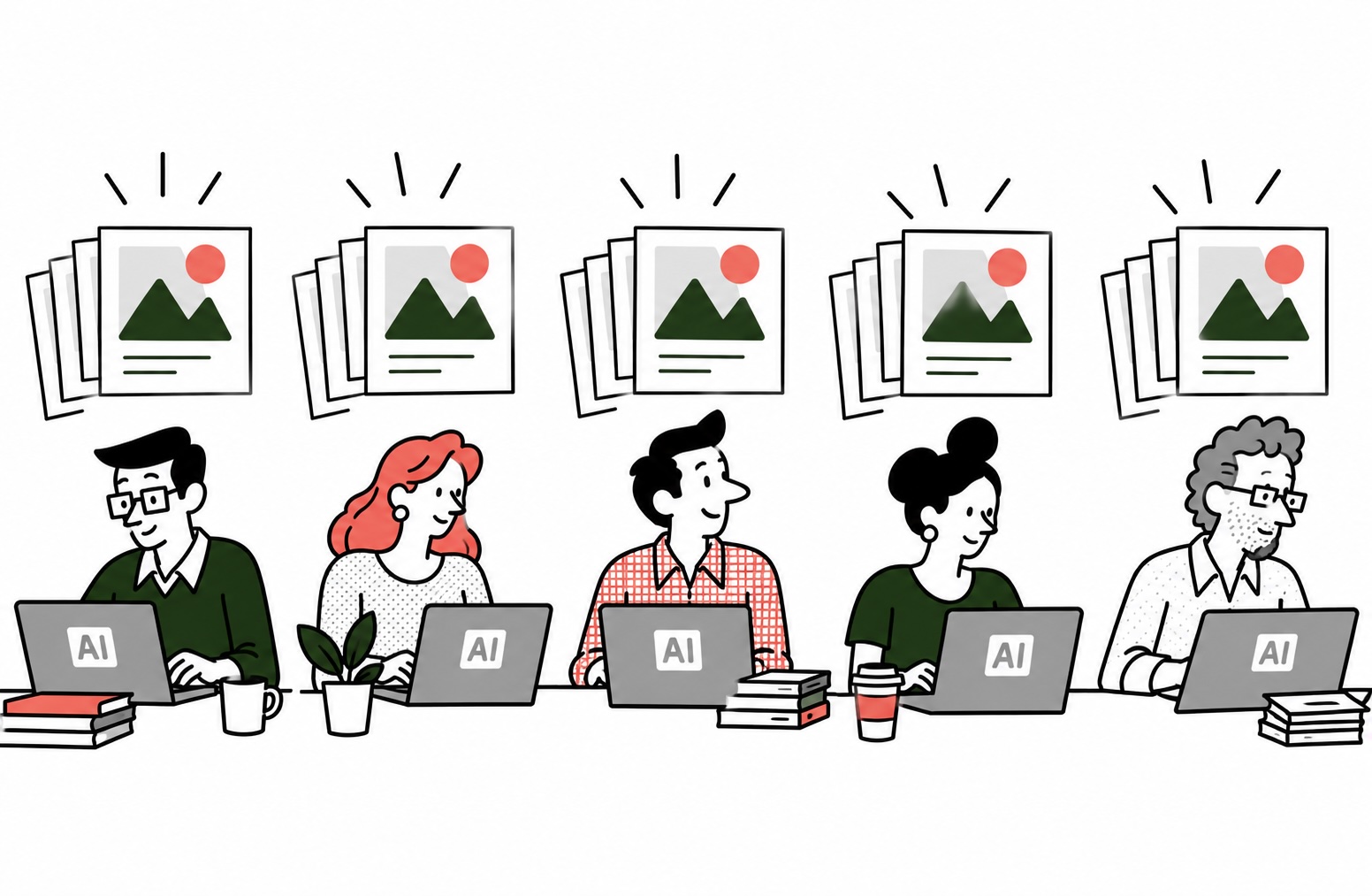
這也是企業導入 AI 時很容易忽略的問題。如果一家公司原本每個月只能製作四則內容,現在利用 AI 可以製作四十則,從生產效率來看確實有非常明顯的提升。但如果客戶看完這四十則內容之後,仍然說不出這家公司與競爭對手有什麼不同,那麼企業增加的主要只是內容產量,而不是品牌影響力。
品牌真正產生作用,不是因為企業說得更多,而是市場經過一次又一次接觸之後,逐漸形成清楚而穩定的認知。客戶開始知道這家公司擅長什麼、相信什麼、適合什麼樣的人,也開始理解為什麼它與市場上的其他選擇不同。當下一次需求出現時,這些認知才可能轉化成信任、選擇,甚至長期的客戶關係。
因此,企業衡量 AI 對品牌的價值時,問題不能只停留在「我們現在可以做多少內容」。更值得關心的是:這些內容有沒有讓客戶更理解我們、更相信我們,也更願意選擇我們? 如果答案沒有改變,那麼 AI 提升的可能只是內容生產能力,而不是品牌建立能力。
AI 可以產生內容,卻不能替企業回答「為什麼是你」
AI 非常擅長學習與重新組合既有模式。它可以生成具有精品感的圖片、科技感的影片、專業的文章,也可以快速分析市場上常見的視覺語言與溝通方式。這些能力讓企業可以更容易達到過去需要專業團隊才能完成的水準,但問題也恰恰出現在這裡:當大家使用相似的工具、模型與資料來源時,市場上可能出現大量品質不差、彼此卻越來越相似的內容。
AI 可以協助企業回答「這張圖怎麼做」「這篇文章怎麼寫」「這支影片怎麼呈現」,卻不能單獨替企業決定一個更根本的問題:客戶為什麼要選擇我們,而不是另一家公司? 這個答案仍然來自企業本身,包括選擇服務誰、真正解決什麼問題、以什麼方式提供價值、相信什麼,以及希望在客戶心中建立什麼樣的位置。
如果這些問題本身沒有被釐清,企業即使擁有更強大的 AI,也只是得到更強大的內容生產能力,甚至有可能更快速地把原本模糊的品牌方向放大出去。AI 很擅長放大,但企業必須先決定什麼值得被放大。
AI 真正可以提升的,不只是企業效率
這並不代表企業需要害怕 AI。相反地,AI 很可能成為未來品牌經營非常重要的能力。它可以協助企業更快回應市場、針對不同客群調整溝通內容、整理大量資訊,也可以讓品牌在更多接觸點與客戶保持互動。對資源相對有限的中小企業而言,AI 更可能讓過去只有大型企業能負擔的部分能力變得普及。
只是企業衡量 AI 的價值時,可以從「節省多少時間與成本」再往前走一步。一張原本需要三天完成的圖片,現在三分鐘就能產生,這是非常清楚的效率提升;但對品牌而言,更重要的是這三分鐘完成的內容,是否幫助客戶更快理解企業的價值、降低選擇時的不確定性,並逐漸增加對品牌的信任。
換句話說,AI 可以讓企業擁有更強的溝通能力,但溝通能力最終仍然需要轉化成企業主真正關心的結果:更多人理解品牌、更多人相信品牌、更多人在需要時選擇品牌,以及更多客戶願意再次回來。 效率是 AI 最容易被看見的價值,而信任與選擇,才是品牌最終需要創造的價值。
當內容越容易產生,企業的「判斷能力」反而越重要
過去許多企業面對的問題是「做不出來」:沒有足夠預算、沒有設計人員、沒有內容團隊,也沒有時間持續與市場溝通。AI 正在快速改善這些限制。但當製作能力不再稀缺,企業面對的問題就會逐漸從「我們能不能做」轉變成「我們到底該做什麼」。
當 AI 一次提供十種圖片、十個標題與十種溝通方式,而且每一個看起來都不差時,企業需要有能力判斷哪一個真正適合自己。什麼訊息值得持續溝通?什麼樣的視覺只是符合流行,什麼才真正代表品牌?哪些內容可以增加市場信任,哪些內容雖然漂亮,卻沒有幫助客戶更理解企業?這些問題不是生成能力的問題,而是品牌判斷能力的問題。
這也是品牌治理開始變得重要的地方。我們過去在 #116 何謂品牌治理(Brand Governance)?品牌治理如何提升企業形象與市場競爭力 中談過品牌治理,也在 #158 品牌到底誰負責?很多公司從一開始就沒說清楚 中討論企業內部究竟由誰承擔品牌責任。當 AI 讓內容生產能力從少數專業人員逐漸擴散到行銷、業務、人力資源、不同市場甚至不同合作夥伴時,企業更需要一套共同的品牌原則,讓所有人的效率最終指向同一個方向。
從品牌顧問的角度來看:AI 應該放大品牌,而不是取代品牌
從 SAM BRANDESIGN 的角度來看,我們會把企業使用 AI 的能力區分成兩個不同層次:內容生產能力與品牌能力。 內容生產能力解決的是企業能不能更快、更有效率地製作內容;品牌能力解決的則是企業是否清楚知道什麼值得被製作、什麼值得被持續溝通,以及這些內容最終希望在市場中建立什麼認知。
前者正是 AI 非常擅長解決的事情,後者則需要企業先建立自己的品牌方向。這也呼應我們在 #157 當企業開始成長,品牌不再只是設計問題 中談過的觀點:當企業規模擴大,品牌逐漸從單純的設計問題轉變成管理問題。AI 的出現,只是讓這個轉變發生得更快。
因此,企業在大量導入 AI 之前,可以先回到幾個更根本的問題:我們希望客戶如何理解我們?客戶為什麼相信我們?我們真正與競爭者不同的地方是什麼?我們希望建立的是什麼樣的長期客戶關係?當這些答案足夠清楚,AI 才不只是降低成本的工具,而會開始成為企業品牌能力的放大器。
結語:不要只讓 AI 幫你做更多,而要讓它幫你變得更清楚
AI 帶來的真正機會,不只是讓企業突然擁有更多圖片、影片與文案,而是讓一家原本就清楚知道自己是誰的企業,可以用前所未有的速度,把自己的價值傳遞給更多人。當所有企業最終都可以取得相似的 AI 工具時,工具本身很難成為長期的競爭優勢,真正留下差距的仍然是企業背後的判斷。
因此,AI 時代真正值得企業主思考的問題,或許不是「我們可以用 AI 做多少內容」,而是:當每個人都能用 AI 做內容之後,我們還有什麼理由值得客戶選擇?
當企業能清楚回答這個問題,AI 才真正開始為品牌創造價值。